
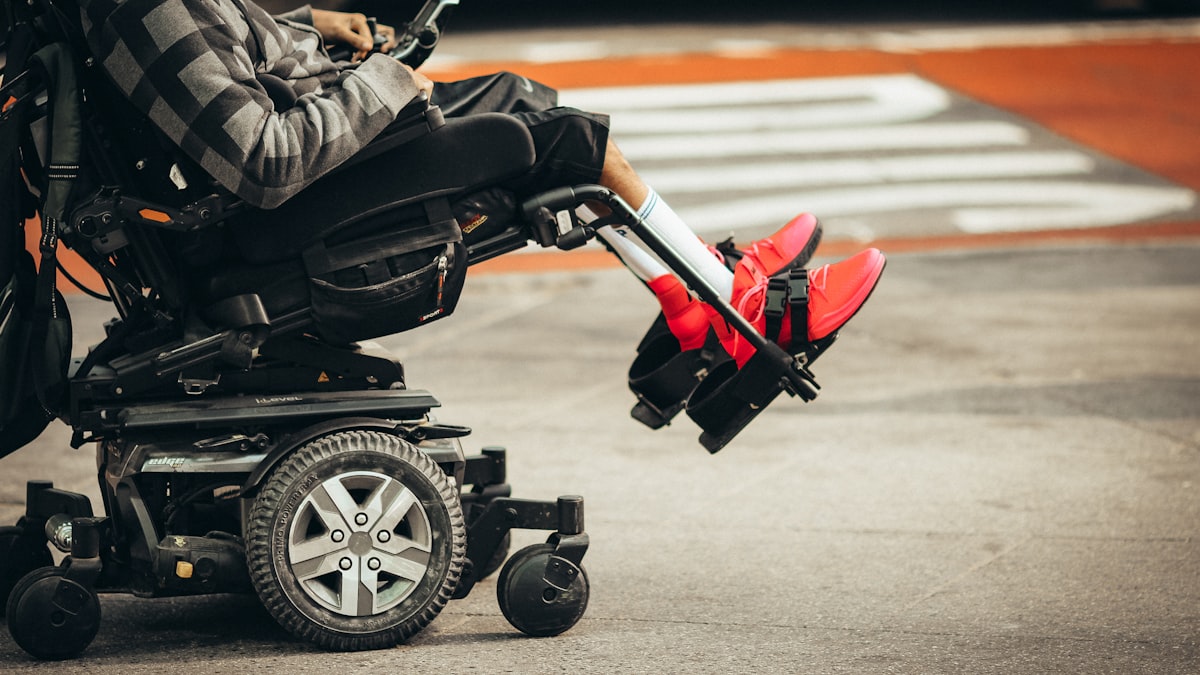
Life in a wheelchair is not defined by limitation — it is defined by the strategies, tools and environment modifications you put in place. With the right approach, wheelchair users can maintain an active, independent daily life at home and in the community. This guide covers the practical techniques that occupational therapists and experienced wheelchair users recommend most.
Transfers — moving between the wheelchair and bed, toilet, or car — are the most important skill for both user and caregiver to master. The safest technique is the 'stand-pivot transfer' for those with some lower-limb function, and the 'lateral sliding-board transfer' for those without. A transfer board (a smooth wooden or polymer plank) makes sliding transfers far smoother and reduces caregiver back strain. Practice with a physiotherapist before attempting independently.
Home modifications pay dividends quickly. Install grab rails beside every toilet, shower and bed. Replace traditional door handles with lever types, which require less grip strength. Ramps at external doorways should have a gradient no steeper than 1:12 (one centimetre rise per twelve centimetres of run) and be made of non-slip material. Widen internal doorways to at least 85 cm if standard frame dimensions allow.
Pressure care prevents one of the most serious wheelchair complications — pressure sores (decubitus ulcers). Reposition or complete a 'wheelchair push-up' (lifting your bodyweight off the seat briefly) every 15–30 minutes. Use a high-quality pressure-relief cushion — gel, foam or alternating-air types are all clinically valid options depending on risk score. Check skin daily over bony prominences: sacrum, ischial tuberosities, and heels.
Community access gets easier with advance planning. Most Indian metro rail stations now have lifts and ramp access; call ahead for restaurants and shops. Carry a lightweight portable ramp (available from CarerIndia) for unexpected kerbs. Many state governments offer disability certificates that grant reserved parking, tax exemptions on adapted vehicles and rail concessions — a physiotherapist or social worker can guide you through the application process.